
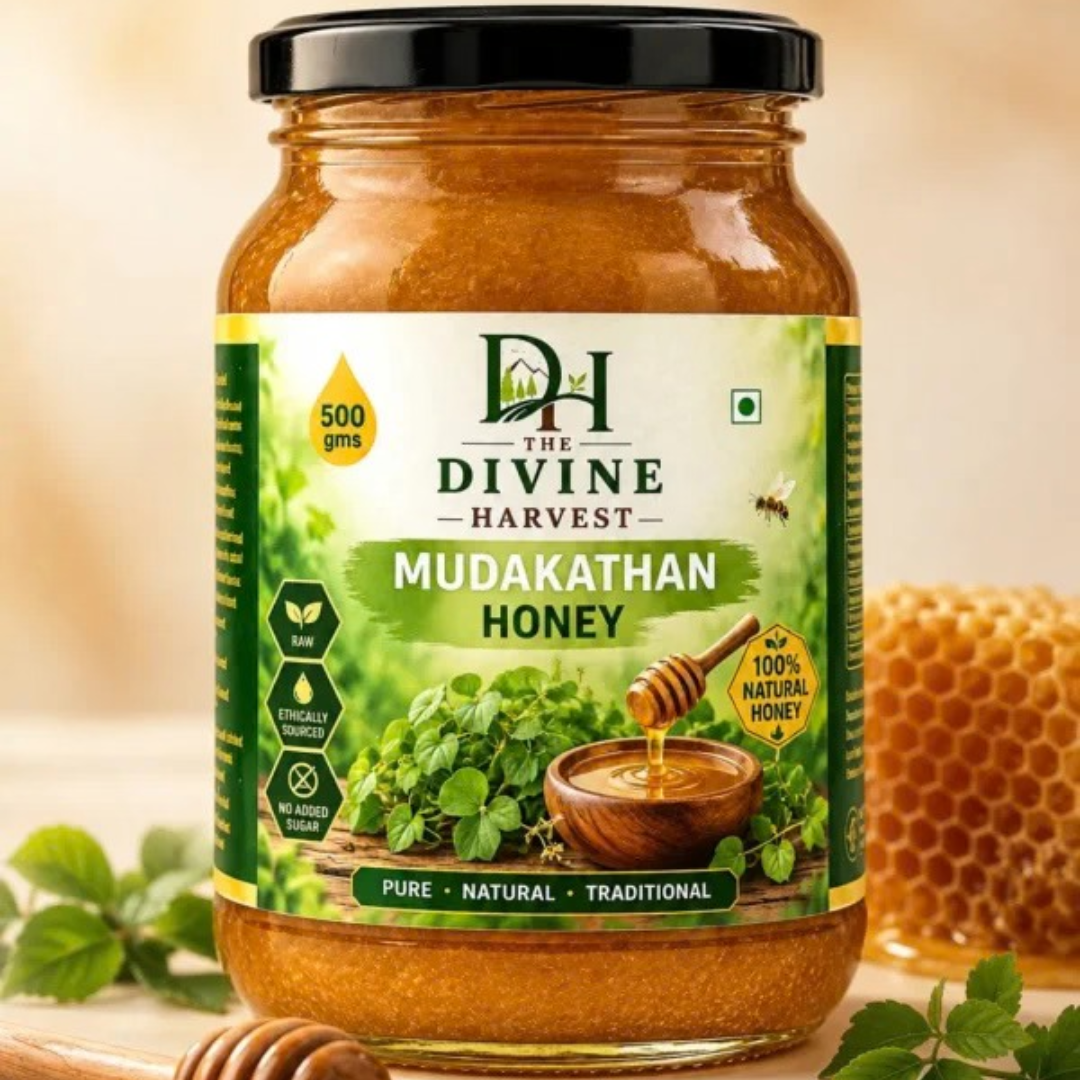
You open a jar of honey after a few weeks and find it has turned thick, cloudy or grainy. Has it gone bad? Not at all. Crystallisation is one of the most natural things honey does – and it is common in raw, unprocessed honey.
Why honey crystallises
Honey is mostly made of two natural sugars: glucose and fructose, with only a little water. Because there is more sugar than the water can comfortably hold, some of the glucose slowly separates out and forms tiny crystals. Over time these crystals spread through the jar, and the honey becomes thick or solid.
Raw honey usually crystallises sooner than heavily processed honey, because it still contains tiny particles of pollen and wax that crystals can form around.
Why some honeys crystallise faster
- The flowers: honey from some flowers is naturally higher in glucose and can set within weeks. Others stay runny for many months.
- Temperature: honey crystallises fastest in cool conditions – roughly 10–15 °C. A cold kitchen or the fridge speeds it up.
- Moisture: lower-moisture honey is thicker and can set more firmly.
How to make it runny again
- Close the lid tightly and place the jar in a bowl of warm water – comfortably warm to your hand, not boiling.
- Leave it for 10–15 minutes and stir gently with a dry spoon. Replace the warm water if needed.
- Repeat until the crystals melt. Only warm the amount you plan to use soon.
Avoid boiling water, direct flame and the microwave – strong heat can spoil the delicate aroma and flavour of raw honey.
How to store honey
- Keep it at room temperature, away from direct sunlight. There’s no need to refrigerate honey.
- Always use a dry spoon – water getting into the jar can make honey ferment.
- Keep the lid tightly closed so it doesn’t absorb moisture or smells from the kitchen.
 No products in the cart.
Comment (1)
Comments are closed.